First-time parents often arrive at a newborn session in Huntersville a little nervous: they have a days-old baby, a diaper bag packed for a siege, and no idea what the next few hours look like. The honest answer is that a newborn session is mostly waiting, and that is by design. The photography happens in short bursts between feeds, changes, and long stretches of settling a baby to sleep.
Here is how a typical session at a studio like Head Over Heels Portrait Photography unfolds, in order.
Before the shutter: the consultation and the warm room
The session really starts days earlier, at a consultation where colors, outfits, and backdrops are chosen, so nothing is being decided while the baby is on the blanket. On session day, the studio is kept warmer than most houses, because an unclothed or lightly wrapped newborn loses heat quickly and a warm baby sleeps more deeply. Parents who dress in layers tend to be more comfortable by hour two.
- Arrival and a feed. Sessions usually start with feeding the baby in the studio. A full baby is a sleepy baby, and the first setup waits until the feed is finished and the baby is drifting off.
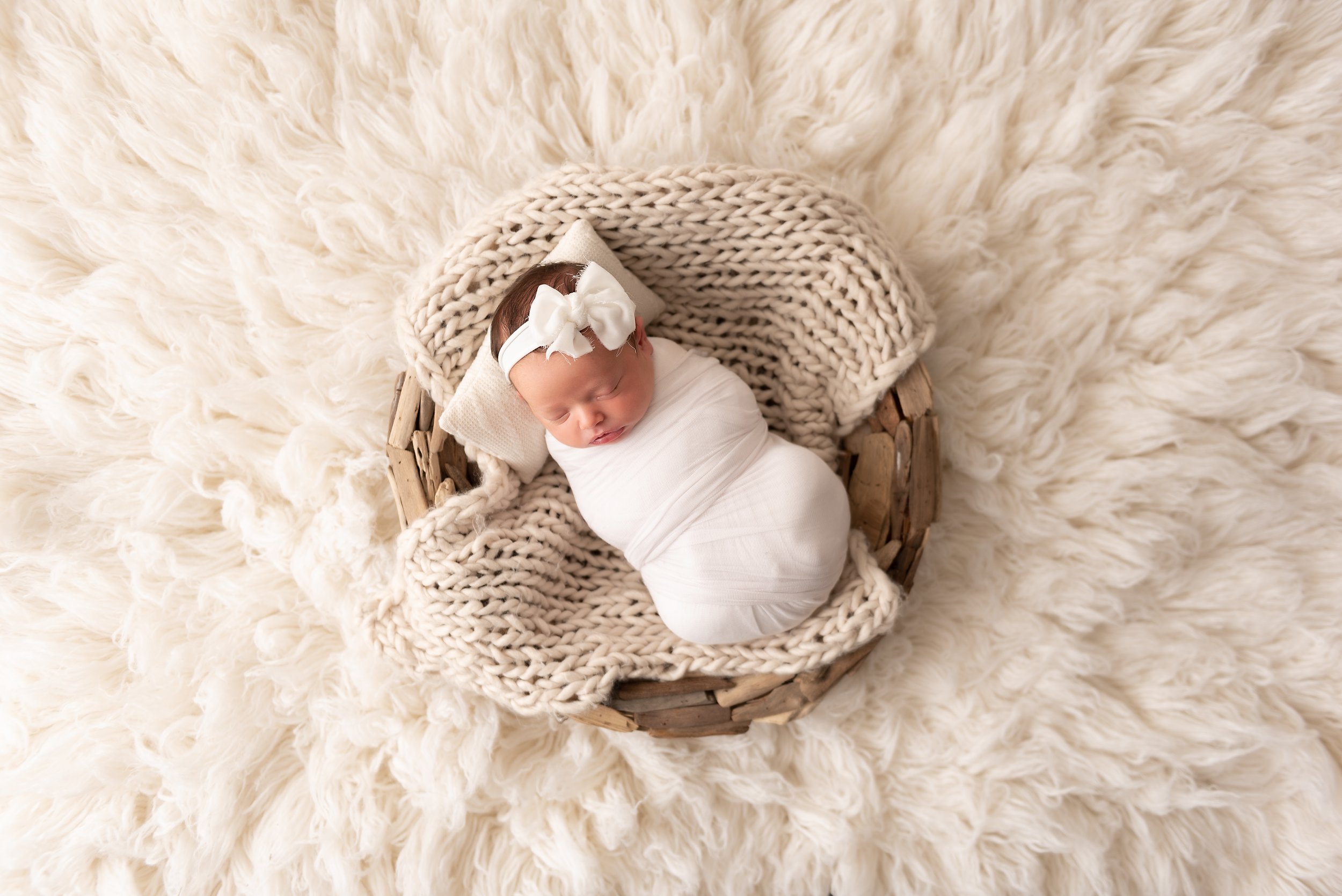
- Wrapped setups first. Most photographers begin with swaddled portraits. Wrapping keeps the baby feeling secure, smooths out startle reflexes, and produces clean images even if the baby is not in the deepest sleep yet.
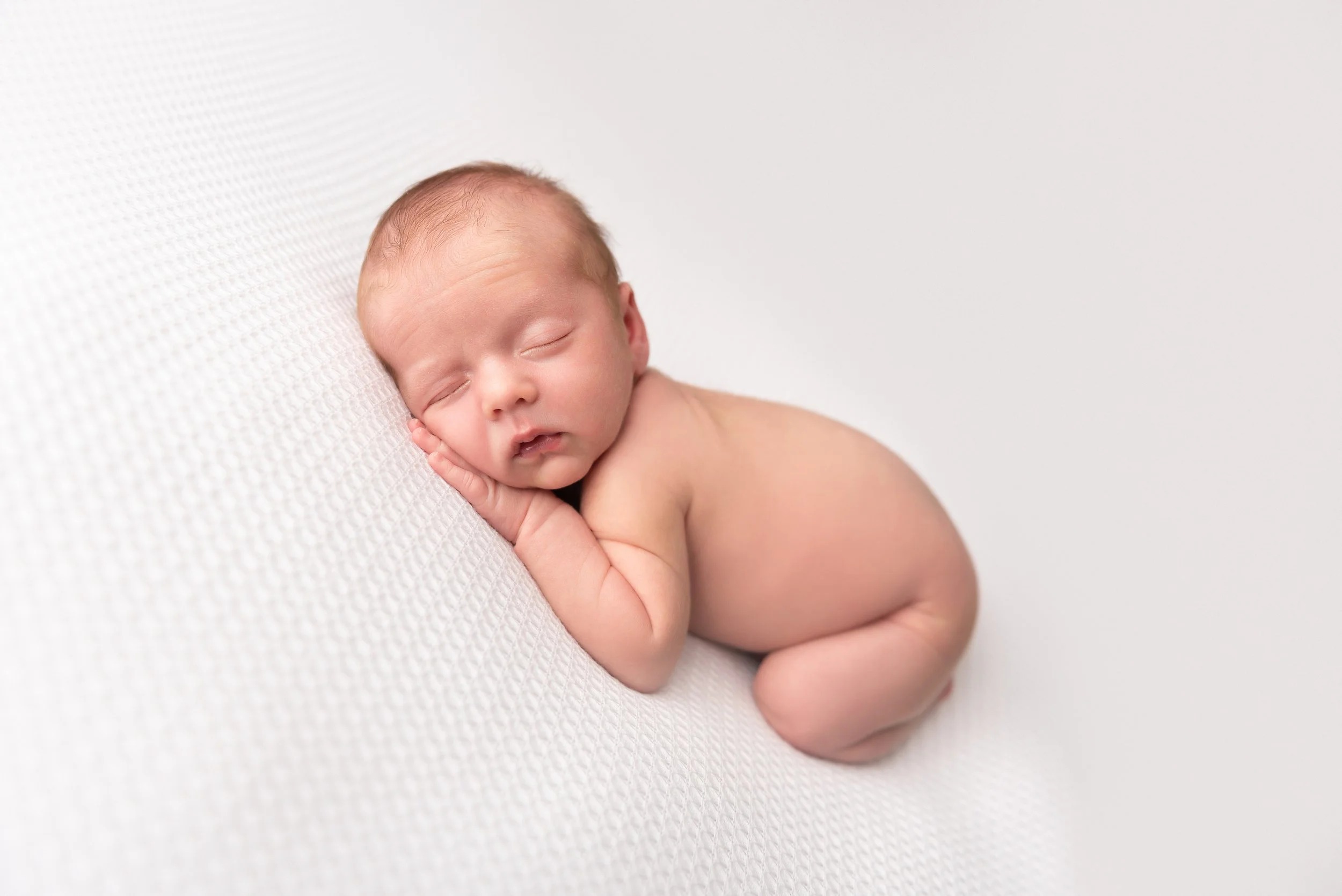
- Posed setups on the blanket and in props. Once the baby is soundly asleep, the curled poses and prop setups happen: baskets, bowls, and layered blankets prepared in advance. Each pose is built slowly and supported throughout.
- Detail shots. Tiny hands, feet, ears, lips, and the swirl of hair get their own close frames, usually while the baby is already posed and undisturbed.
- Parent and sibling portraits. These are often saved for later in the session, when the baby can simply be held. Siblings join for a short, planned set rather than sitting through the whole morning.
- Breaks as needed. Feeding, changing, and cuddling breaks happen whenever the baby asks for them. A session with several breaks is a normal session, not a difficult one.
What parents actually do
Less than they expect. Between setups, parents mostly sit, watch, rest, and hand the baby back and forth for feeds. Many studios have a seating area for exactly this. If you are recovering from delivery, say so: the pace can adjust, parent portraits can come first, and you can sit out the parts of the morning you do not need to see.
Bring more than you think you need of the consumables. Extra diapers, wipes, a change of clothes for the baby and for yourselves, and whatever feeding supplies your baby uses. A spare shirt for a parent has saved more than one family portrait.
After the session: viewing and choosing
The edited images are usually shown at a separate viewing appointment, in the studio or sometimes at the family's home or over a video call. This is when families choose prints, wall art sizes, and album images with guidance, looking at portraits on a calibrated screen so colors match the final prints. It is worth deciding before that appointment which walls or rooms you are actually decorating, because it turns a big gallery into a short, confident list of choices.
What editing does, and what it should not do
After the session, the images are edited before you see them. Newborn editing is mostly gentle work: correcting the redness and blotchiness that are normal in days-old skin, softening temporary flakes and baby acne, and balancing colors so skin tones look the way they looked in the room. Composite safety shots are finished in this stage, when the frames with supporting hands are merged and the hands removed.
What good editing does not do is remodel the baby. The point of editing at this standard is a true record of your child in their first days, cleaned up, not a generic ideal of one. If you have a preference here, strong or minimal retouching, say it at the consultation, because editors default to the house style they assume you chose them for.
Common questions
Should I keep my baby awake before the session so they sleep there?
No. A tired, overstimulated baby is harder to settle, not easier. Follow your normal routine and feed on arrival; the studio pace does the rest.
Can siblings and grandparents be included?
Yes, with planning. Sibling shots are kept short and scheduled at a set point in the session, and extended family portraits can be arranged at the consultation stage.
What if my baby will not sleep?
Then the session adapts: more wrapped portraits, more parent-and-baby images, and awake shots with eye contact. Photographers who do this weekly treat an awake baby as a variation, not a failure.
← All guides from Head Over Heels Portrait Photography← Back to Head Over Heels Portrait Photography